If you’ve ever plugged your stats into a TDEE calculator and wondered, “Can I really trust this number?” — you’re not alone. Total Daily Energy Expenditure (TDEE) calculators are popular tools in the health and wellness world, but like most things in nutrition, the answer is: it depends.
Let’s break it down.
🌿 What Is TDEE?
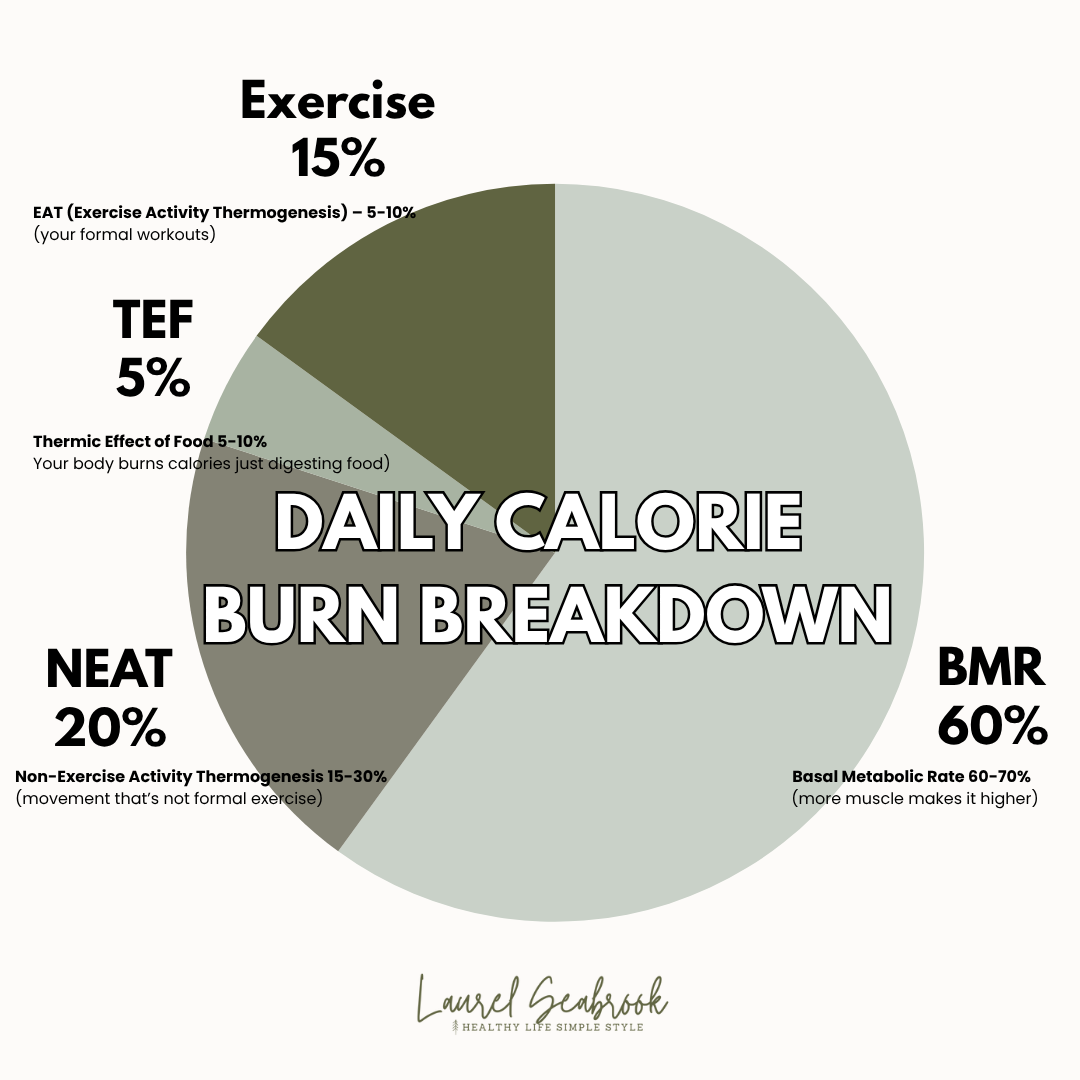
TDEE stands for Total Daily Energy Expenditure. It’s the number of calories your body burns each day — not just at rest, but through daily activities, workouts, and even fidgeting. Think of it as your “calorie budget.”
Your TDEE is based on two things:
- Basal Metabolic Rate (BMR): Calories burned at rest.
- Activity Level: How much you move (exercise + daily activity).

🔹 How TDEE Calculators Work
Most online calculators use one of three formulas:
- Mifflin-St Jeor: The most commonly used and fairly accurate for the average person.
- Harris-Benedict: An older formula that tends to give slightly higher estimates.
- Katch-McArdle: The most accurate if you know your body fat %, because it factors in muscle mass.
After your BMR is calculated, it’s multiplied by an “activity factor” (sedentary to very active) to estimate your daily calorie needs.
🔹 So… How Accurate Are They?
The short answer: pretty close, but not perfect.
👉 On average, a TDEE calculator can get you within about 10–15% of your actual calorie burn. That’s good enough for a starting point, but it’s not an exact science.
Why? Because calculators can’t account for everything, like:
- Muscle vs. fat mass (muscle burns more calories).
- Hormonal changes (hello, menopause).
- Metabolic adaptations (your body may slow down if you’ve been dieting for a while).
- NEAT (Non-Exercise Activity Thermogenesis): all the little movements you do outside of workouts, which can vary wildly person to person.
🔹 How to Use a TDEE Calculator the Right Way
Instead of treating it like an exact prescription, use it as a baseline:
- Calculate your TDEE.
- Track your intake and progress (weight, measurements, energy, how your clothes fit) for 2–3 weeks.
- Adjust as needed. If you’re not seeing results, tweak calories up or down.
✨ Remember: It’s not about perfection, it’s about direction.
🔹 Why This Matters for Women Over 40
As we age, our metabolism naturally shifts. Hormonal changes, muscle loss, and lifestyle factors all play a role in lowering our calorie needs. That doesn’t mean fat loss is impossible — it just means understanding your TDEE helps you work with your body instead of against it.
The good news? Building muscle through strength training and moving more throughout the day can give your TDEE a nice little boost.
🌱 Final Thoughts
TDEE calculators aren’t crystal balls — but they are a helpful tool to point you in the right direction. The real magic happens when you take that estimate, apply it, and adjust based on your body’s feedback.
Because at the end of the day, your body isn’t a calculator… it’s smarter than that.
✨ Coming Soon: I’m building a full Weight Loss Course for Women Over 40 where I’ll walk you step-by-step through how to calculate your TDEE, set the right calorie target, and make it simple to follow with high-protein meals, movement strategies, and mindset tools.
Leave a Reply