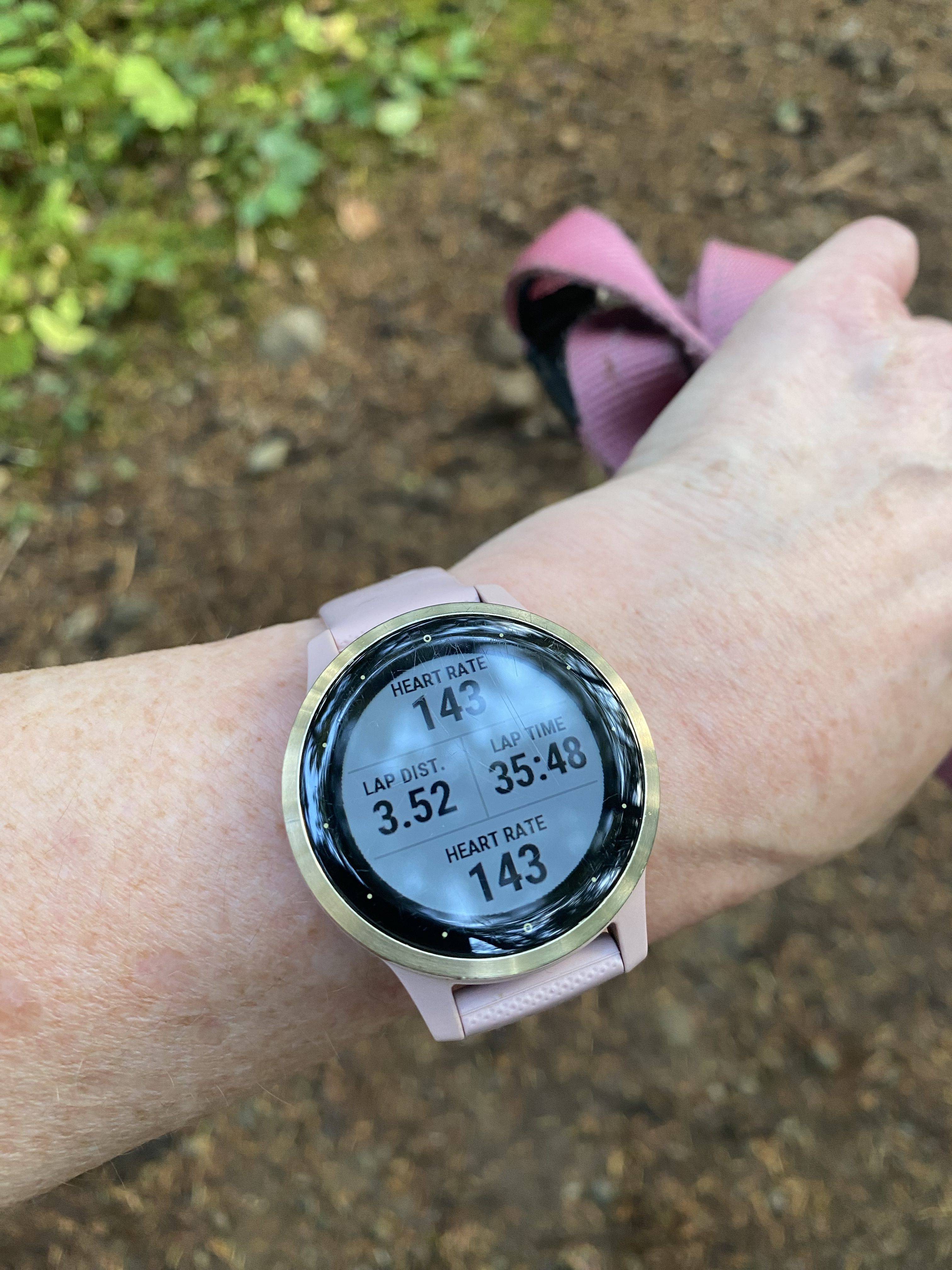

If you’ve ever looked down at your watch mid-run and thought, “Why is my heart rate so high when I’m barely moving?”— you’re not alone.
That’s been me lately. I live in a hilly area, and even when I feel like I’m running slow, my heart rate monitor tells another story. It’s not unusual for me to see numbers in the 160s or higher — and that’s when I realized it was time to start training smarter, not harder.
So now, I’m working on bringing my heart rate down on my runs — slowing my pace, walking more, and learning to stay in my Zone 2 range, where my body can actually burn fat more efficiently.
Understanding Heart Rate and Fat Loss

Your heart rate is your body’s built-in feedback system. When it’s too high for too long, you’re mostly burning quick energy from carbs, not stored fat.
For most women in midlife, the fat-burning zone (Zone 2) is roughly 60–70% of your maximum heart rate, or about 120–140 bpm for many of us.
It’s the “conversational zone” — the pace where you could talk in sentences, breathe steadily, and feel like you could go on for a while.
That’s where your body becomes efficient at using fat for fuel and building long-term endurance.
Hills Happen — and That’s Okay
Running in a hilly area like mine adds a challenge — my heart rate can spike quickly, even at a jog. So instead of fighting it, I’ve started adjusting:
- Walking uphill when my heart rate climbs too high
- Jogging the flats and downhills to recover
- Focusing on breathing through my nose to stay calm and steady
It’s not about running slower forever — it’s about training your body to get stronger at a lower effort. Over time, that means I’ll be able to go faster while keeping my heart rate lower — a clear sign of improved fitness and endurance.
Using a Wearable to Stay in the Zone

A more accurate way to get target heart rate uses your resting heart rate
to get Heart Rate Reserve (HRR),
HRR = (Max HR [which is 220 subtract your age] – Resting HR)

(If you wear a fitness tracker, it does this math for you — but it’s nice to know what the numbers mean!)
My watch has become one of my best accountability partners. I’ve set an alert for when my heart rate goes over 140 bpm — a gentle reminder to ease up.
If you use a wearable too, try:
- Setting heart rate alerts for your Zone 2 range
- Watching your recovery heart rate (how quickly it drops after exercise)
- Tracking your VO₂ max trend, which often improves from slower, steadier workouts
These numbers are more than just data — they’re proof that your body is adapting, even if the pace feels slow for now.
The 80/20 Rule for Sustainable Results
You don’t need to push hard every workout to see progress. In fact, the best balance for weight loss and endurance is:
80% easy effort, 20% hard effort.
When you spend most of your time in that lower heart rate zone, you:
✅ Burn more fat for energy
✅ Improve recovery and consistency
✅ Strengthen your heart and endurance base
✅ Reduce stress hormones that can stall fat loss
That other 20% — your hills, intervals, or speed bursts — helps keep your fitness sharp without overloading your system.
What VO₂ Max Really Means — and How I’m Working to Improve It
Your VO₂ max measures how efficiently your body uses oxygen — it’s basically your endurance “score.”
I used to think improving it meant pushing harder, but I’ve learned that slowing down actually helps it rise.
By spending more time in my Zone 2 range (120–140 bpm), I’m building more mitochondria (your body’s energy factories), improving oxygen use, and training my heart to pump more efficiently.
So while I might be walking more on my runs right now, my watch tells me something important — my VO₂ max is trending up.
That’s real progress, even if my pace is slower for now.
My Takeaway

I won’t lie — it’s been an adjustment. Having to walk on runs felt frustrating at first, but now I see it differently. I’m still working hard — just in a smarter way.
By focusing on keeping my heart rate down and staying consistent, I’m improving my endurance, supporting fat loss, and giving my body what it actually needs: time to adapt.
If your watch tells you to slow down, listen. That’s your heart saying, “Let’s get stronger — the smart way.”
Your Turn
Do you track your heart rate or VO₂ max? Have you tried staying in your Zone 2 range? I’d love to hear how it’s going for you — drop a comment below and share your experience!
Related Posts:
Progress Over Perfection: Why Photos & the Scale Don’t Tell the Whole Story
Why Oxidative Stress Could Be Blocking Your Weight Loss (and What You Can Do About It)
Leave a Reply